
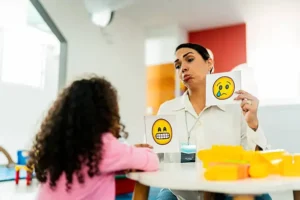
In today’s fast-paced world, helping preschoolers understand and manage their emotions is just as important as teaching them to count or recognize letters. Social-emotional learning (SEL) builds the foundation for empathy, communication, self-control, and problem-solving—skills that shape not only academic success but also lifelong well-being. At the preschool level, children are learning to identify feelings, express needs appropriately, and navigate friendships. When educators intentionally teach emotional awareness, children gain confidence, focus, and resilience in both school and life.
Why Emotional Intelligence Matters in Early Childhood
Preschoolers experience a wide range of emotions every day—joy, frustration, excitement, disappointment—and they are just beginning to understand what those feelings mean. Emotional intelligence helps children recognize these emotions and respond thoughtfully rather than impulsively. When teachers and parents take the time to label feelings (“I see you’re feeling frustrated because it’s not your turn yet”), children begin to connect words with their emotional experiences. This connection not only improves communication but also builds self-regulation skills, allowing them to pause and think before reacting. In classrooms that prioritize social-emotional development, children tend to show greater focus, cooperation, and empathy toward their peers.
Practical Strategies to Support Emotional Learning
Building emotional skills doesn’t require complex programs—it can be woven into daily routines through simple, consistent practices. Here are a few effective strategies:
-
Model emotional expression: Teachers and parents can demonstrate healthy ways to express and manage feelings. Saying “I’m feeling a bit overwhelmed, so I’m going to take a deep breath” shows children that emotions are natural and manageable.
-
Use storybooks and role-play: Reading stories that explore different emotions or acting out scenarios helps children see how characters handle various situations. This builds empathy and perspective-taking.
-
Create calm-down spaces: A cozy corner with soft toys, breathing cards, or emotion charts gives children a safe place to regulate themselves when they feel upset or overstimulated.
-
Celebrate kindness and cooperation: Recognizing positive social behaviors (“You waited patiently for your turn—that was kind!”) reinforces emotional maturity and self-control.
These techniques not only help children express emotions but also develop focus, since self-regulated learners are better equipped to pay attention and engage in learning activities.
How Emotional Education Strengthens Focus and Relationships
When children learn to identify and express their feelings, they become better problem-solvers and listeners. A calm and emotionally aware child can focus on a task longer, follow directions more carefully, and build stronger peer relationships. Social-emotional learning also teaches children to notice how their actions affect others, promoting kindness and cooperation in group settings. Over time, this emotional stability fosters a positive classroom climate—one where children feel safe to explore, make mistakes, and grow.
Ultimately, teaching preschoolers about emotions is not just about reducing tantrums or classroom disruptions—it’s about empowering them to understand themselves and connect meaningfully with others. By nurturing emotional awareness early on, educators and parents are planting the seeds for lifelong focus, empathy, and confidence.